Why ChatGPT SEO is the Future of Search Marketing

Learning how to rank in ChatGPT has become essential as AI search transforms how people find information online. With ChatGPT generating over 1.7 billion monthly views and AI Overviews appearing in traditional search results, businesses can no longer ignore this shift toward conversational AI search.
Quick Answer: How to Rank in ChatGPT
- Create high-quality, conversational content that directly answers user questions
- Build brand mentions across authoritative websites and communities like Reddit
- Gather positive reviews on platforms like G2, Capterra, and Google Business
- Optimize for Bing since ChatGPT uses Bing's search results for real-time data
- Allow AI crawlers to access your site through robots.txt permissions
- Create a branded GPT in the ChatGPT marketplace with your knowledge base
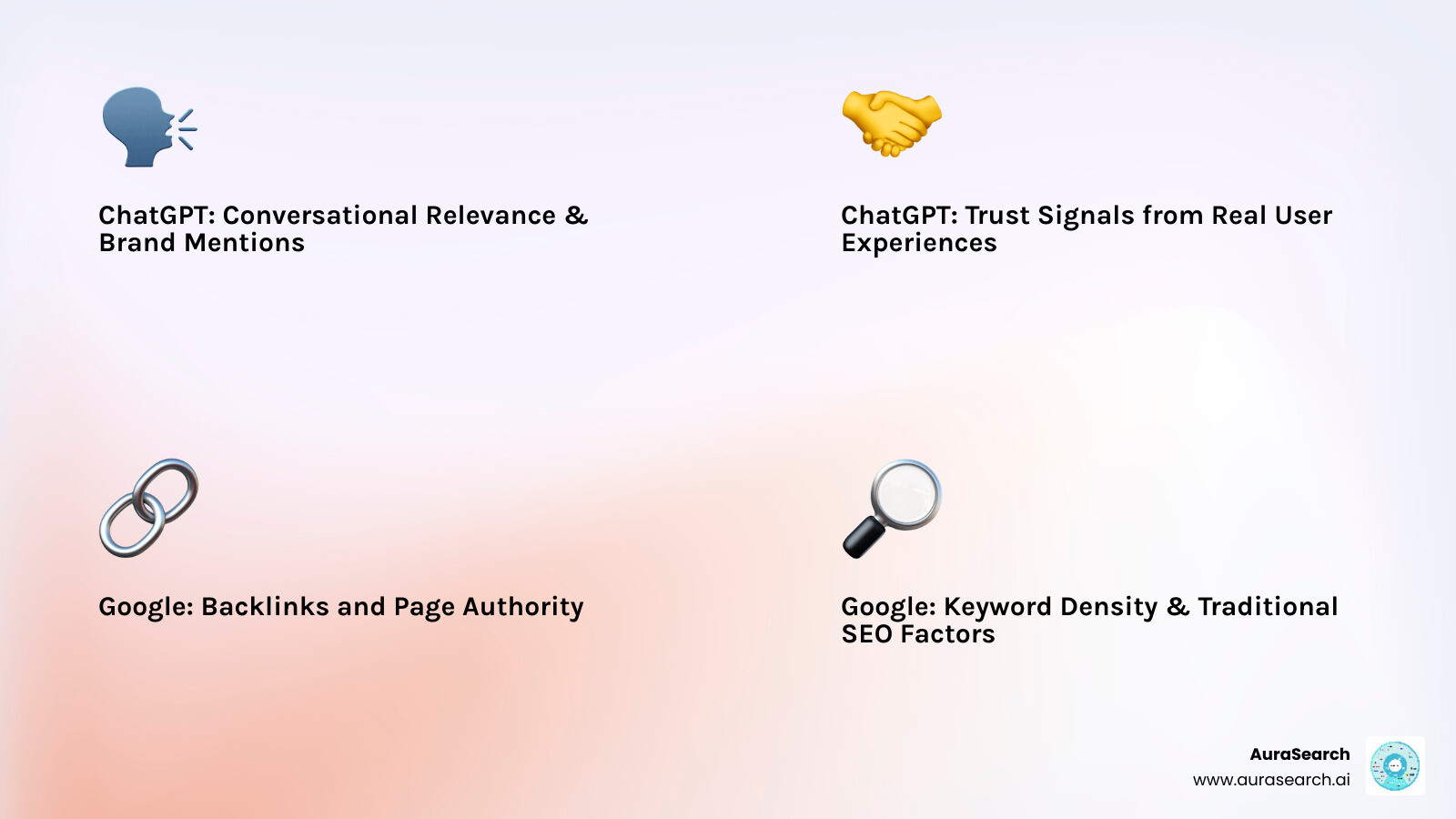
The rules of search are changing. While Google relies heavily on backlinks and keyword density, ChatGPT prioritizes brand mentions , conversational relevance , and trust signals from real user experiences.
This evolution from traditional SEO to what experts call Answer Engine Optimization (AEO) means your content strategy must adapt. Instead of optimizing for keyword lists, you need to optimize for natural language queries. Instead of chasing backlinks, you need to build authentic brand presence across the web.
The good news? Many businesses haven't adapted yet, creating a massive opportunity for early movers who understand these new ranking factors.
Understanding How ChatGPT Ranks Information
Think of ChatGPT as that incredibly smart friend who seems to know everything - but here's the catch: their knowledge comes from two very different sources. Understanding how to rank in ChatGPT starts with grasping this unique setup.
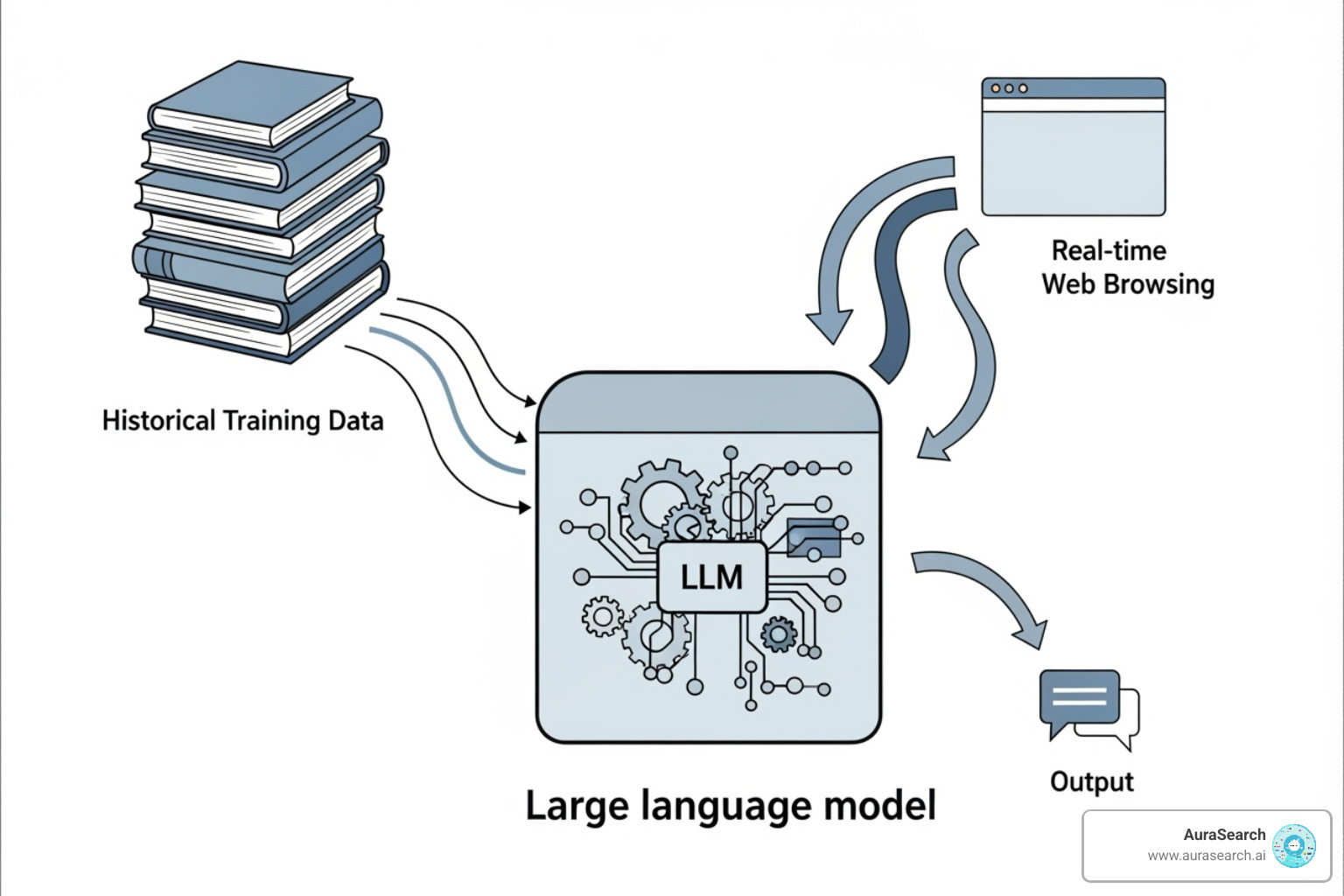
Unlike Google, which constantly crawls the web like a tireless spider, ChatGPT operates differently. It's a large language model (LLM) that learned from a massive dataset during its training phase. Picture it as studying from the world's biggest textbook - but that textbook has a publication date.
This creates something called knowledge cutoff dates . Earlier versions like ChatGPT-3.5 only knew things up to 2021. ChatGPT-4 extended this to April 2023. Ask about yesterday's news? The core model might draw a blank.
But here's where it gets interesting. ChatGPT now has live browsing capabilities through its Bing integration. When it needs fresh information, it can hop online and grab current data in real-time. The introduction of plugins expanded this even further, letting it access specific websites and databases. You can dive deeper into these capabilities on OpenAI's blog on ChatGPT plugins.
So what makes ChatGPT recommend one business over another? It's not just throwing darts at a board. Our research shows it weighs several core ranking factors : authority , relevance , user engagement signals , and trust signals . It's like having a conversation with someone who values credible sources and wants to give you the most helpful answer possible.
The Core Factors: Authority, Relevance, and Trust
When ChatGPT makes a recommendation, it's drawing from patterns it learned about what makes information trustworthy and valuable. Let's break down what really matters:
Authority signals work like your online reputation score. The more your brand gets mentioned positively across different platforms, the more ChatGPT sees you as a reliable source. It's not just about having a website - it's about having a presence that people talk about.
Content relevance goes way beyond stuffing keywords into your pages. ChatGPT actually understands what people are really asking for. When someone types "best project management tool for small teams," it wants content that specifically addresses small team needs, not a generic software review that mentions every feature under the sun.
The trustworthiness factor is where things get really interesting. Just like Google's E-E-A-T framework (Experience, Expertise, Authoritativeness, and Trustworthiness), ChatGPT looks for credible sources. This is where online reviews become your secret weapon. High ratings on platforms like G2, Capterra, or Google Business Profile signal that real people vouch for your business.
ChatGPT vs. Google: A New Ranking Paradigm
Here's where traditional SEO thinking needs an update. While Google still loves its backlinks and keyword density, ChatGPT plays by different rules:
| Ranking Factor | Traditional Google Search | ChatGPT (AI Search) |
|---|---|---|
| Primary Focus | Index web pages for keyword queries | Answer conversational questions with helpful responses |
| Key Signals | Backlinks, keyword density, page authority | Brand mentions, conversational relevance, trust signals from reviews |
| Content Style | Keyword-optimized, structured for crawlers | Natural language, conversational tone, direct answers |
| Data Sources | Real-time web crawling and indexing | Training data plus live Bing browsing when needed |
| Success Metrics | Click-through rates, time on page, bounce rate | Content quality, answer accuracy, user satisfaction |
The shift from traditional SEO to what we call Answer Engine Optimization means thinking differently. Instead of building backlinks , you need to focus on brand mentions across the web. Instead of keyword lists, you need conversational queries that sound like real people talking.
ChatGPT doesn't have a traditional search results page - it gives you a direct answer. This means your content needs to be so good and trustworthy that an AI would confidently recommend it in a conversation. It's a higher bar, but it also means less competition for that coveted recommendation spot.
ChatGPT holds about 2% of the search market compared to Google's dominance. But with billions of monthly users turning to it for quick, conversational answers, learning how to rank in ChatGPT isn't just smart - it's essential for staying ahead of the curve.
Strategies 1 & 2: Master Your Content and On-Page Signals
Let's explore how to rank in ChatGPT by making your website irresistible to AI! Your content and how it's set up are super important. Imagine talking directly to ChatGPT's brain. When your words are clear, organized, and truly answer questions, ChatGPT is much more likely to pick them out and share them.
It's not just about what you write. It's also about making sure your site's technical bits are in top shape. This allows AI "helpers" to easily find and understand all your valuable information.
Strategy 1: Create High-Quality, AI-Friendly Content
You've heard "content is king," right? Well, for ChatGPT, it's more like a friendly, super-smart ruler who loves a good conversation. Here's how to get your content noticed:
First, focus on quality and depth . ChatGPT loves content that's accurate, easy to understand, and truly helpful. Make sure your articles are well-researched and offer real solutions. For instance, if you're writing about "best practices for SaaS onboarding," cover everything from what users need to cool interactive demos and helpful automated support.
Next, think about your content structure and readability . Just like people, AI models appreciate information that's neatly organized. Use clear headings (like H1, H2, H3) and bullet points. They break up the text, making it much easier to read. This also helps ChatGPT quickly grasp your main points. And guess what? A friendly, conversational tone works wonders, as it mimics how people talk to AI.
Then there's Natural Language Optimization (NLO) . Forget just stuffing keywords in. Instead, imagine what questions someone would ask ChatGPT. Optimize your content for those natural, conversational queries. Tools like Answer the Public are fantastic for finding out what people are really asking. For example, instead of just "SEO tools for marketers," you could write about "Find how the right SEO tools can improve your marketing strategy." See how that sounds more like a question someone would type?
Don't forget long-tail keywords . These are naturally conversational and show what a user really wants. Using them helps you connect with specific audiences and makes the experience more personal. ChatGPT really values that personal touch!
Strategy 2: Optimize Technical Elements for AI Visibility
Even the best content needs a strong foundation. These technical steps ensure AI "crawlers" can easily get to and understand your content.
Page speed is a big one. A fast-loading website makes everyone happy – your visitors and AI crawlers. You can use tools like Google PageSpeed Insights to spot anything slowing your site down. Simple fixes include compressing images (try TinyPNG or WebP formats) and using "lazy loading" so images only load when they're needed.
With so many people browsing on their phones, a great mobile experience is a must. Your site should look good and work smoothly on any device. AI models definitely favor sites that offer a seamless experience for everyone, no matter how they're viewing it.
Now, for a little secret weapon: Schema markup and structured data . Think of this as giving AI a special "cheat sheet" about your content. It helps search engines (and AI models like ChatGPT) understand exactly what your content is about. For example, marking up your product reviews, FAQs, or local business details makes it super easy for ChatGPT to pull out accurate information and present it clearly.
Finally, ensure you have clear navigation and layout . An easy-to-use website with clear menus, headings, and buttons isn't just good for your human visitors. It also helps AI crawlers map out your site and understand its structure, making it simpler for them to find and use your information.
Strategies 3 & 4: Build Authority and Trust Across the Web
Think of ChatGPT as a friend who's incredibly well-read and always listening to what people are saying about different brands. When someone asks for a recommendation, it naturally thinks of the companies that keep coming up in positive conversations across the internet.
That's exactly why building your brand's authority and trust signals across the web is so crucial for how to rank in ChatGPT . Unlike traditional SEO where backlinks reign supreme, AI search puts a premium on brand mentions and genuine trust signals that show real people actually value what you offer.
Strategy 3: Amplify Brand Mentions and Digital PR
Every time your brand gets mentioned online, it's like casting a vote for your credibility in ChatGPT's vast memory bank. The more quality mentions you accumulate, the more likely you'll pop up in AI-generated recommendations.
Guest posting remains one of the most effective ways to get your brand in front of new audiences while building authority. When you share valuable insights on reputable industry sites, you're not just earning backlinks - you're establishing your brand as a trusted voice that other experts want to associate with.
But here's where things get interesting for AI search: forum engagement on platforms like Reddit and Quora can be incredibly powerful. ChatGPT often draws insights from popular discussions on these platforms. When you authentically participate in conversations and provide genuine value (not just promotional content), you're building the kind of organic brand presence that AI models notice and trust.
Digital PR takes this concept even further. Securing coverage in industry publications, podcasts, or news outlets creates high-authority mentions that significantly boost your brand's perceived credibility. The key is building genuine relationships with journalists and bloggers who cover your industry.
Don't forget about unlinked mentions either. These are instances where someone talks about your brand online but doesn't link back to your site. Tools can help you find these opportunities, and a friendly outreach email can often turn an unlinked mention into a valuable backlink.
Influencer marketing works particularly well when the partnerships feel natural and authentic. When respected voices in your industry genuinely recommend your services, those mentions carry significant weight with both human audiences and AI models.
Strategy 4: Cultivate Positive Reviews as Trust Signals
Here's a fascinating statistic: over 70% of consumers regularly read online reviews before making decisions. But it's not just humans paying attention - ChatGPT treats positive reviews as powerful trust signals that indicate real customer satisfaction.
The magic happens when you make leaving reviews as easy as possible for your happy customers. This means having a presence on the review platforms that matter most in your industry. For B2B software companies, that might be G2 or Capterra. For local businesses, Google Reviews and Yelp become crucial.
Reputation management isn't just about collecting reviews - it's about actively engaging with them. When you respond thoughtfully to both positive and negative feedback, you're showing ChatGPT (and potential customers) that you genuinely care about customer experience. This kind of authentic engagement becomes part of your brand's digital footprint.
The real power comes from leveraging social proof strategically. When your company gets recognized as "Best Marketing Tool of 2024" or earns consistently high ratings across multiple platforms, these accolades become part of the narrative that AI models associate with your brand.
ChatGPT isn't looking for perfect companies - it's looking for trustworthy ones. A few thoughtfully handled negative reviews can actually boost credibility by showing you're a real business that takes customer feedback seriously and works to improve.
The beautiful thing about this approach is that it creates a positive cycle. Better reviews lead to more ChatGPT recommendations, which bring in more customers, who leave more positive reviews. It's the kind of sustainable growth strategy that works in the long term, regardless of how search technology evolves.
Strategies 5 & 6: Advanced Tactics for How to Rank in ChatGPT
Ready to really get ahead and master how to rank in ChatGPT ? These next strategies are for those who want to take a more direct approach. They involve working with the AI itself, influencing how its crawlers see your site, and even embedding your brand's knowledge right into the ChatGPT platform. Think of it as getting your brand a VIP pass into the AI's mind!

Strategy 5: How to Rank in ChatGPT by Optimizing for AI Crawlers & Bing
This strategy is all about making sure ChatGPT can "see" and understand your content when it browses the web. ChatGPT often taps into real-time web data, and a big part of that comes from Bing.
First things first, you need to allow AI crawlers access
to your website. Imagine your website as a library. You want the AI's robot librarians to freely browse your shelves and find your great books! This means setting up your robots.txt
file correctly. It tells search engine bots (and AI bots like GPTBot) which parts of your site they can visit. If your site blocks these important visitors, ChatGPT simply won't be able to pull information from your pages. You can find all the specific details on how to do this in OpenAI’s bot documentation.
You should also keep an eye on the llms.txt initiative . This is a new idea that gives websites more control over how large language models (like ChatGPT) use their content. While it's still being developed, being an early adopter here could give you a real advantage in the future.
And here's a super important tip: optimize for Bing . This is often overlooked, but it's a huge piece of the puzzle! Why? Because ChatGPT relies on the same ranking signals as Microsoft Bing for its real-time search. By making your website shine on the Bing search engine , you're essentially doing double duty. You'll improve your visibility on Bing and significantly boost your chances of getting noticed and recommended by ChatGPT. Dive into Bing Webmaster Tools, submit your sitemaps, and make sure your content meets Bing's quality guidelines. It's a smart move that pays off in multiple ways!
Strategy 6: How to Rank in ChatGPT by Creating a Branded GPT
This is perhaps the most direct and exciting way to ensure your brand's information is perfectly understood and readily available within the ChatGPT world. It's like having your very own expert built right into the system.
OpenAI's GPT Store lets businesses develop custom GPTs . Think of it as creating your own special version of ChatGPT, but trained specifically on your company's knowledge. You can upload all your essential information directly: your documentation, frequently asked questions (FAQs), product catalogs, and service details. This means when someone asks a question related to your business, your custom GPT can provide accurate, on-brand answers straight from the source.
Once you've built your unique GPT, you can even embed your GPT directly onto your own website. This turns it into a super smart, conversational agent that can answer customer questions, guide users, and provide information, all powered by the knowledge you've given it.
This process of direct information feeding is incredibly powerful. Instead of hoping general web crawlers find and correctly interpret your content, you're telling the AI exactly what it needs to know. This ensures consistency and gives you amazing control over your brand's story within the ChatGPT environment. It's a fantastic way to boost your brand visibility and directly engage with users who are looking for information you can provide.
Frequently Asked Questions about ChatGPT SEO
As we journey deeper into the exciting new world of AI search, it's totally normal for questions to pop up! You're probably wondering about the nitty-gritty of how to rank in ChatGPT and how it all works. Let's tackle some of the most common questions we hear.
How is ranking in ChatGPT different from Google?
This is a fantastic question, and it really gets to the heart of the matter! Think of it this way: Google is like a super-organized librarian who gives you a list of books (web pages) related to your query. ChatGPT, on the other hand, is like a super-smart friend who just tells you the answer directly.
The fundamental difference lies in their core "brains." Google is a traditional search engine that constantly crawls and indexes the entire web in real-time. It then serves up a Search Engine Results Page (SERP) – that familiar list of blue links – based on keywords and a gazillion complex algorithms. ChatGPT, however, is a generative AI chatbot. While it has gained the amazing ability to browse the web live (thanks, Bing!), its primary smarts come from a massive training dataset.
This means a few key things for how to rank in ChatGPT :
- Training Data vs. Live Index: ChatGPT's core knowledge has a "knowledge cutoff" date, meaning it might not know about super-recent events from its initial training. Google's index, though, is constantly buzzing with real-time updates.
- Conversational Context: ChatGPT is a master of conversation! It truly understands the intent behind your natural language questions and aims to give you a direct, comprehensive answer, rather than just a list of keyword matches.
- Emphasis on Brand Mentions over Backlinks: For years, backlinks were the gold standard for Google. But for ChatGPT, it's more about your brand's overall reputation. It places more weight on widespread brand mentions and how often you're talked about across the web.
- Lack of a Traditional SERP: You won't get a list of 10 blue links from ChatGPT. It gives you the answer. So, the idea of "ranking #1" shifts from being the first link to being the authoritative source ChatGPT chooses to cite or recommend directly.
How long does it take to see results from ChatGPT SEO?
Okay, let's be real: this isn't an overnight magical change! Just like planting a garden, seeing results from ChatGPT SEO takes time and consistent effort. It's definitely a marathon, not a sprint.
Why the wait? Well, there are a few factors at play:
- Model Retraining Cycles: ChatGPT's core models are periodically updated and retrained. This is when fresh information from the web is truly integrated into its knowledge base. These cycles aren't instant, and they're not on a fixed public schedule.
- Knowledge Cutoff Dates: New content you publish needs to either be included in these training datasets or be easily findable by ChatGPT's real-time browsing features. It takes time for new information to filter through.
- Long-Term Strategy: Building brand authority, gathering glowing positive reviews, and consistently crafting high-quality, AI-friendly content are all long-term endeavors. Much like traditional SEO, consistency, patience, and a steady hand are your best friends here.
While you might see some quicker wins from optimizing for Bing (since ChatGPT uses Bing for live data), truly becoming an authoritative source that ChatGPT trusts and recommends is a continuous effort. We always tell our clients to think of it as an ongoing journey. For even more fascinating insights into the changing world of AI SEO, be sure to Read our AI SEO insights.
Can I pay to be featured in ChatGPT?
This is a straightforward one: no, you absolutely cannot pay to be featured or ranked in ChatGPT's organic recommendations.
Unlike traditional search engines that often have sponsored listings or paid ad placements, ChatGPT's responses are generated purely based on its algorithms' assessment. It's all about relevance , authority , and trustworthiness drawn from its training data and real-time browsing.
ChatGPT offers a wonderfully ad-free browsing experience. This means its outputs are never influenced by advertising dollars. Instead, the focus remains entirely on organic recommendations driven by genuine quality and authority . So, any mentions or recommendations from ChatGPT are a true reflection of your brand's authentic online presence and solid credibility – something money just can't buy!
Conclusion: Winning in the New Era of AI Search
The future of search is knocking at our door, and learning how to rank in ChatGPT has shifted from being a "nice-to-have" to an absolute must for any business serious about their online presence. We're witnessing the biggest change in search behavior since Google first launched, and the companies that adapt now will be the ones thriving tomorrow.
Think about it: your customers are already having conversations with AI instead of typing keywords into search boxes. They're asking ChatGPT for restaurant recommendations, product comparisons, and business advice. If your brand isn't part of those conversations, you're missing out on a massive opportunity.
Throughout this guide, we've walked through six powerful strategies that can transform how AI perceives and recommends your business. Creating high-quality, conversational content that actually answers people's questions sets the foundation. Optimizing your technical elements ensures AI crawlers can find and understand your site. Building brand mentions across the web and cultivating positive reviews establishes the trust and authority that ChatGPT values so highly.
The more advanced tactics we covered - optimizing for AI crawlers and Bing while creating your own branded GPT - give you direct pathways into the AI ecosystem. These aren't just theoretical strategies; they're practical steps that forward-thinking businesses are already implementing.
Here's what excites us most: we're still in the early days of this change. Most businesses haven't figured out how to adapt their digital strategies for AI search, which means there's a golden window of opportunity right now.
The shift to conversational search isn't coming - it's here. And while change can feel overwhelming, it's also incredibly exciting when you have the right partner to guide you through it.
At AuraSearch, we live and breathe this stuff. As the only platform offering expert generative AI SEO services, we've helped countless businesses steer these changes and position themselves as authorities in their industries. We understand both the traditional SEO foundations and the cutting-edge AI optimization techniques that will define the future.
Your brand deserves to be part of the conversation when potential customers ask AI for recommendations. Let's make that happen together. Open up your AI search potential with AuraSearch and start winning in this new era of search.