The New Search Landscape
AI Overviews SEO is the practice of optimizing content to appear in Google's AI-generated summaries that now appear at the top of search results. Here's what you need to know:
Key AI Overviews SEO Strategies:
- Create comprehensive, authoritative content that directly answers user questions
- Focus on high-intent, non-branded queries with clear user intent
- Implement structured data and schema markup for better AI understanding
- Optimize for featured snippets using FAQ formats and direct answers
- Build topical authority through expert-level content and quality backlinks
Google's AI Overviews , powered by its Gemini language model, are reshaping search. These AI summaries appear above traditional results, providing instant answers by synthesizing information from multiple web sources.
The impact is measurable: keywords triggering AI Overviews see an average CTR decline of 15.49% . This shift is a challenge, but also an opportunity for those who adapt.
AI Overviews appear for about 6.71% of US search queries , with usage nearly doubling from January to March 2025. As Google aims to reach over a billion users, optimizing for this new landscape is essential.
The key difference? Traditional SEO focused on ranking high in search results. AI Overviews SEO focuses on being the authoritative source that AI systems choose to cite and feature in their generated responses.
The Data-Driven Impact of AI Overviews on Search Performance
The data on AI Overviews is sobering. Since their rollout, click-through rates have shifted, reshaping the entire search landscape.
Keywords triggering AI Overviews see an average CTR decline of 15.49% . This significant change leads to more "zero-click searches," where users get answers from the AI summary without visiting a website.
Gartner predicts search engines will lose 25% of organic traffic by 2026 due to AI. This reflects a user shift toward instant, synthesized answers over clicking multiple links.
However, AI Overviews SEO isn't just damage control. Being cited in an AI Overview positions you as a trusted authority. The resulting traffic is often more qualified, as users have seen a preview and want to learn more. It's about quality leads, not just raw traffic.
How AI Overviews Affect Different Keywords and Rankings
The impact varies dramatically depending on the type of keywords you're targeting and where you currently rank.
Branded keywords are thriving . Only 4.79% of branded searches trigger AI Overviews, but they see a CTR increase of 18.68% . This reinforces brand trust and guides users to your site.
Non-branded keywords face the steepest decline , with a 19.98% CTR drop . Users searching for general information are often satisfied by the AI summary alone.
Ranking position is critical. Sites outside the top 3 see a 27.04% CTR decline . AI Overviews push organic results down, reducing visibility for lower-ranked pages.
The worst-case scenario is when keywords trigger both AI Overviews and Featured Snippets , leading to a 37.04% CTR decline . This double-feature of answers leaves little incentive for users to click through.
| Category | Average CTR Change |
|---|---|
| Branded Keywords | +18.68% |
| Non-Branded Keywords | -19.98% |
| Lower Ranking Positions | -27.04% |
| Featured Snippet Overlap | -37.04% |
While daunting, these numbers reveal opportunities. Adapting your content strategy to work with AI Overviews can help capture qualified traffic and build authority.
Mastering AI Overviews SEO: A 7-Step Optimization Strategy
The search landscape has changed. While Google's Search Essentials are a baseline, AI Overviews SEO requires a more nuanced, strategic approach than traditional methods.
AI systems act as content curators, seeking reliable, comprehensive sources. Your content must appeal to both human readers and AI evaluators by demonstrating authority and relevance.
The fundamentals still apply. E-E-A-T (Experience, Expertise, Authoritativeness, Trustworthiness) is more crucial than ever, as AI systems excel at identifying these quality signals. Strong topical authority is a key competitive advantage.
The execution is what's different. Optimization now means being the source AI chooses to cite. This demands a deeper understanding of user intent, comprehensive content, and a solid technical foundation.
Our 7-step strategy systematically addresses these new requirements, positioning your content as a go-to source for AI. These steps will help you thrive in the AI-powered search era.
Being proactive is key. By acting now, you can capture the opportunities AI Overviews create while others are still reacting to traffic changes.
1. Create Comprehensive, Authoritative Content
The foundation of AI Overviews SEO is creating definitive content. When Google's AI synthesizes information, your content should be the comprehensive, reliable primary reference.
This means moving beyond simple keyword optimization to focus on "information gain." Provide unique value through original research , proprietary data , or clearer explanations than competitors.
Answer user questions directly . Structure content conversationally with clear, query-matching headings and provide immediate, actionable answers. AI systems favor this direct approach.
Long-tail keywords are a secret weapon. These specific, question-based searches (e.g., "how long should cold brew steep for maximum caffeine") are goldmines for AI Overviews and are often easier to rank for.
Understanding user intent is crucial, as 96.5% of AI Overviews are for informational keywords. Anticipate the 'why' behind a query—is the user troubleshooting, learning, or comparing? Address the full context.
Creating in-depth guides that cover topics comprehensively signals to AI systems that you're an authoritative source. Research shows that thorough content covering all aspects of a subject ranks for 68% more long-tail keywords than narrow, focused pieces. This builds what we call topical authority—essentially proving to Google that you're the go-to expert on your subject.
Showcasing first-hand experience is a game-changer. As emphasized in Google's E-E-A-T guidelines, integrate case studies, document processes, and share personal results. Author credentials and authentic insights help your content stand out from generic AI-generated text.
2. Focus on High-Intent, Non-Branded Queries
While non-branded keywords are hit hardest by AI Overviews (-19.98% CTR decline), this challenge presents an opportunity for savvy marketers.
The key is to shift focus from broad, top-of-funnel terms to high-intent queries from users further down the decision-making path.
For example, an AI Overview can satisfy a search for "what is SEO." But a search for "best SEO audit checklist for ecommerce sites" indicates a user ready for action who needs detailed information beyond a simple summary.
The sweet spot for AI Overviews SEO is targeting mid-to-bottom funnel content. While informational queries trigger most AI Overviews (96.5% of cases), focus on users actively seeking solutions or comparing options.
Mid-to-bottom funnel keywords like "how to measure ROI from content marketing" are more valuable than broad terms like "digital marketing basics," as they indicate a user is closer to taking action.
Create problem-solving content that offers comprehensive, actionable solutions. While AI Overviews provide quick answers, users will click through for step-by-step guidance, detailed frameworks, or nuanced insights that a summary can't provide.
This approach turns the AI Overview into an ally. A citation in the summary acts as a powerful preview, demonstrating your expertise and drawing qualified visitors to your site.
3. Implement Advanced Technical SEO for AI Overviews SEO
Technical SEO bridges your content and AI systems. For AI Overviews SEO , the goal is to structure content so clearly that AI models choose it as a trusted source.
Structured data is a secret weapon. Schema markup provides a roadmap for AI, much like an organized filing cabinet. Over 60% of AI results include rich snippets from pages using schema for this reason.
Don't stop at basic schema. Comprehensive schema markup (90%+ property completion) has a 43% higher impact on rich results . For a recipe, this means marking up not just the title, but also cooking time, ingredients, and nutritional information.
Create entity connections within your schema using properties like "mentions," "about," and "sameAs." Content with interconnected entity schema is 51% more likely to appear in AI-generated answers. For example, connect a digital marketing article to related entities like SEO and social media.

You can test your structured data implementation using Google's own structured data testing tool to make sure everything is working correctly.
Citations and references matter more than ever. AI Overviews link back to sources, so citing reputable sources within your content signals to AI that your information is well-researched and trustworthy.
Page experience is non-negotiable. Flawless site performance is essential for AI systems to crawl and understand your content efficiently. Core Web Vitals directly impact indexing and eligibility for AI Overviews.
Your website should load quickly (LCP within 2.5 seconds), respond instantly to user interactions (INP under 200ms), and maintain visual stability (CLS under 0.1). These are the entry fee for competing in the AI-powered search landscape.
Mobile-friendliness is critical. With most searches on mobile, an excellent mobile experience is essential. A poor mobile UX can disqualify your content from AI Overviews.
4. Leverage Multimedia and Voice Search
The world of AI Overviews SEO is no longer text-only. Today's AI systems favor rich, multimedia content that tells a complete story.
Just as you'd use visuals to explain a complex topic to a friend, AI systems are learning to appreciate a multimodal approach to information.
Images and infographics are powerful SEO allies. They break down complex information into digestible visuals. AI models can "read" images, so use descriptive alt text and captions to provide context.
Video content is increasingly important. AI Overviews show a strong, growing preference for citing YouTube videos. High-quality, informative videos provide rich content for AI systems to use.
Properly optimize videos with detailed descriptions, accurate transcripts, and well-organized chapters. This helps both users and AI understand your content's value.
Voice search optimization is another key layer. With about 30% of global searches now voice-based, queries are becoming longer and more conversational.
Voice searchers use natural, conversational language, often with question words like "how," "what," and "why." Content written in this style sees 37% more engagement.
Your content should feel like a friendly conversation. Write with a natural, helpful tone, as if answering a question directly. This appeals to both AI and human readers.
5. Build Authority with Backlinks and Internal Linking
Backlinks are digital endorsements. Links from respected sites act as a critical trust signal for AI Overviews SEO , helping algorithms assess which sources to feature.
The old approach of chasing low-quality links is obsolete. Quality trumps quantity . One backlink from an authoritative publication is more valuable than dozens from irrelevant directories, a distinction AI models recognize.
Authority isn't just external. Your internal link structure is crucial for demonstrating topical expertise. Thoughtfully connecting related content creates a web of knowledge that signals your authority to users and AI.
For example, a guide on local SEO should link to related articles on Google Business Profile, keyword research, and citations. This demonstrates comprehensive coverage, which AI systems recognize as a sign of authority.
Contextual linking with descriptive anchor text is more powerful than generic phrases like "click here." It helps AI models understand content relationships and reinforces your topical authority.
This approach creates a virtuous cycle: stronger internal authority and quality backlinks increase your chances of being featured in AI Overviews, which in turn attracts more high-quality links.
6. Optimize for Featured Snippets
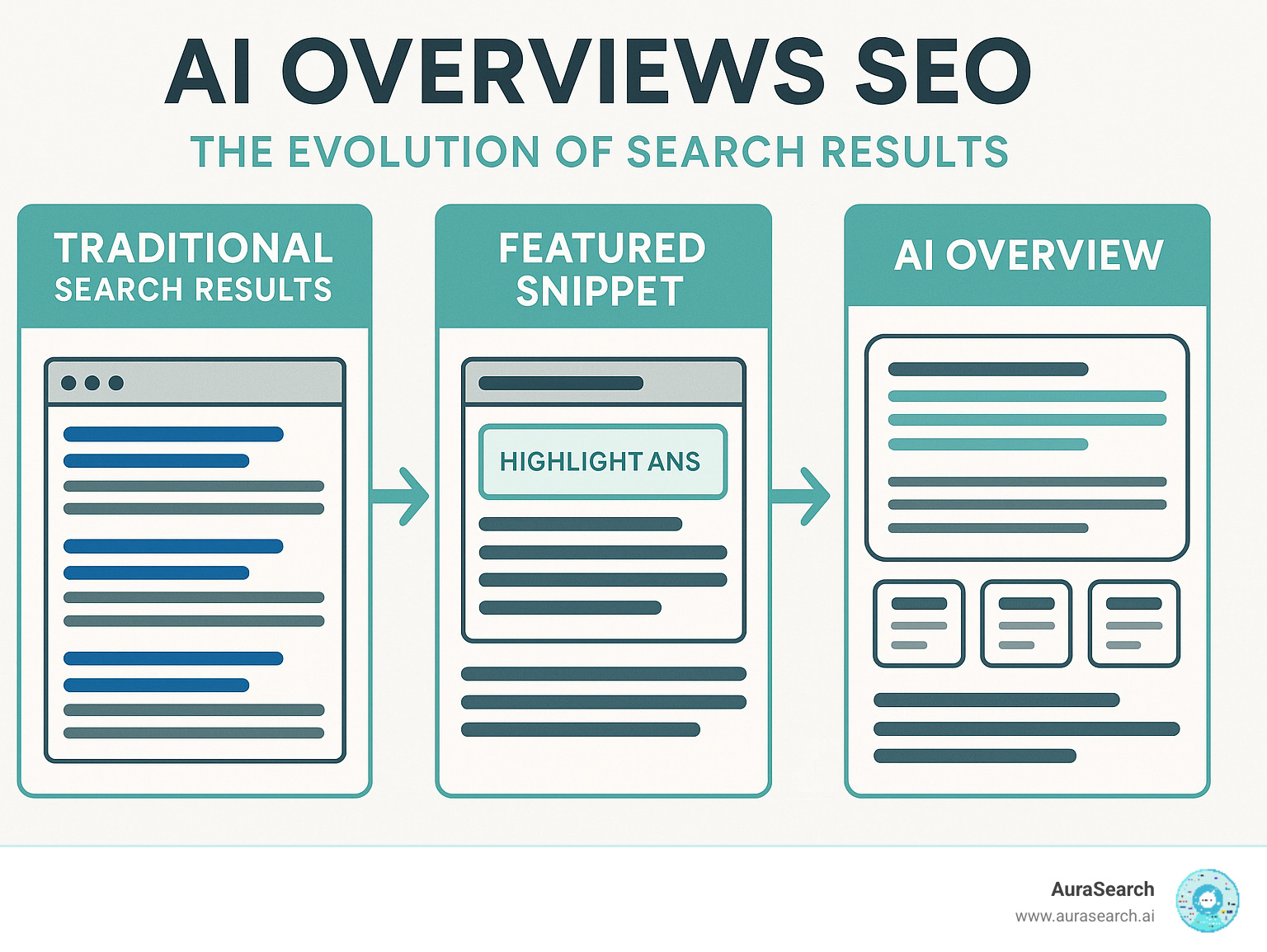
There's a significant overlap between content in Featured Snippets and AI Overviews . Optimizing for Featured Snippets is excellent training for AI Overviews SEO .
Optimizing for Featured Snippets teaches Google's AI how to understand and present your content, like giving it a formatted answer key.
Use the FAQ format . Create clear, concise FAQ sections that directly answer audience questions. AI models favor this structured format.
List-formatted content like how-to guides, numbered lists, and bullet points performs exceptionally well. AI systems can easily extract and present this information.
The key is to provide direct answers upfront. Lead with the answer, then provide supporting details, so AI doesn't have to dig for it.
Analyze the "People Also Ask" (PAA) section for your target keywords. Answering these real user questions in your content creates a roadmap for winning both Featured Snippets and AI Overviews.
This strategy is efficient: optimizing for Featured Snippets also increases your chances of being featured in AI Overviews, setting you up for success in both.
7. Special Considerations for eCommerce
AI Overviews SEO is shifting online retail. While most Overviews are informational, savvy eCommerce businesses are finding ways to use them as a competitive advantage.
A search for "best wireless headphones under $200" shows transactional intent. Users want recommendations and product access. AI Overviews can be a secret weapon here.
Product listings and shopping feeds are gaining prominence in AI Overviews. Google pulls data directly from Google Shopping feeds, so your Google Merchant Center data must be accurate and comprehensive.
Product schema markup is critical. Implement detailed Product schema on your pages, including pricing, availability, reviews, and specs. This structured data helps AI models match your products to user queries.
Traffic from AI Overviews is highly qualified . Users who click through after seeing your product in a summary are well-informed and closer to purchasing.
This helps attract ready-to-buy visitors. The rise of free product listings in AI Overviews allows smaller eCommerce businesses to compete for visibility without large ad budgets.
The key is ensuring your product data tells a complete, compelling story that AI systems can easily understand and present to potential customers.
Monitoring Performance and Adapting to the Future of Search
AI Overviews SEO demands an 'always-on' mentality. Like gardening, it requires constant attention and adjustment, not a set-it-and-forget-it approach.
Businesses that thrive will be those that practice proactive adaptation . Instead of scrambling after traffic drops, they are constantly monitoring, testing, and adjusting their strategies.
Continuous improvement is essential for survival. AI Overview algorithms evolve constantly, so what works today may not work tomorrow. Monitoring performance data is non-negotiable.
How to Track Your Visibility in AI Overviews
Monitoring performance in AI Overviews is tricky. Google Search Console bundles AI Overview data with regular organic data, making direct measurement difficult.
However, the SEO community is resourceful. Third-party monitoring tools are stepping up to fill this gap, with many now tracking a site's visibility in AI Overviews under their "SERP features" sections.
These tools help answer key questions: Which keywords trigger AI Overviews? Is our content being cited? How are CTRs for these queries affected?
Performance analysis goes beyond just tracking numbers. We need to identify patterns in the types of content that get featured, benchmark our performance against others in our industry, and spot trends before they become obvious to everyone else.
Building a tracking system that gives you early warning signals is key. When you see a keyword starting to trigger AI Overviews, you can quickly optimize your content to increase your chances of being cited.
The Future Outlook for AI Overviews SEO
We are in the early stages. Google plans to invest $75 billion in AI , aiming to reach over a billion users by the end of 2024. This is a long-term commitment, not a test.
AI Overviews are here to stay and will become more sophisticated. Despite early issues like the infamous glue on pizza suggestion, the accuracy improvements since their rocky start show how quickly these systems adapt.
The future of search is more interactive and personalized. AI Overviews will handle more complex queries, widening the gap between a quick summary and a full site visit.
Copyright and attribution will evolve. While Google states its systems automatically determine sources, expect more robust attribution models as creators push for recognition.
The global rollout continues to expand, bringing AI Overviews SEO considerations to new markets and languages.

The businesses that will win in this evolving landscape are the ones that start preparing now. AI Overviews SEO isn't just about adapting to today's changes - it's about building a foundation that can flex and grow with whatever comes next.
For more insights into navigating this evolving landscape of AI and search, explore more info about our blog where we share the latest strategies and observations from the front lines of AI Overviews SEO .
Frequently Asked Questions about AI Overviews
As AI Overviews SEO becomes more common, businesses have questions. Here are answers to the most frequent concerns.
Can I opt out of my content appearing in AI Overviews?
Yes, you can opt out of AI Overviews, but we generally advise against it.
You can use the nosnippet
tag
to block snippets (including AI Overviews), the more drastic noindex
tag
to prevent indexing entirely, or your robots.txt
file
to block crawlers.
Opting out is usually a mistake because you're refusing free visibility . Google's tests show links in AI Overviews get more clicks than traditional results, and this traffic is highly qualified.
Unless you have strong legal or privacy reasons, blocking your content can significantly harm your overall visibility and organic performance.
How does Google handle copyright and attribution in AI Overviews?
Google's approach to copyright and attribution in AI Overviews is still evolving.
AI Overviews synthesize information and include link cards that serve as citations , directing users and traffic to the source websites.
Google has stated its systems automatically select sources to feature, aiming to provide comprehensive answers while still directing users to original content.
This is an area of ongoing development . Content creators have fair use concerns, and we expect more refined attribution methods to emerge as the technology and legal landscape mature.
Are AI Overviews always accurate?
No, AI Overviews are not always accurate, particularly in their early stages.
Viral examples, like suggesting to put glue on pizza , highlight the challenges of generative AI.
Google acknowledges the rocky start and is continuously working to improve accuracy .
AI Overviews are like a smart student that sometimes misunderstands . As models improve with more high-quality data, their reliability is increasing.
Our advice: Always exercise critical judgment , especially for sensitive topics. AI Overviews are helpful for general information but don't replace professional advice.
The good news is Google's ongoing improvements are making the system more accurate. Our job in AI Overviews SEO is to provide high-quality, accurate source material to improve AI outputs.
Conclusion: Thriving in the AI-Powered Search Era
Search has changed forever. AI Overviews SEO isn't a trend; it's the new reality reshaping how people find information.
The data ( 15.49% average CTR decline , predicted 25% search volume drop by 2026 ) can be concerning. But every shift creates winners: those who adapt quickly.
This new landscape rewards what has always mattered: creating helpful, authoritative, user-first content . AI favors quality, depth, and expertise. By focusing on comprehensive content, structured data, and topical authority, we improve the web for everyone.
The opportunity is massive. While others are still learning, forward-thinking companies are positioning themselves as the authoritative sources AI will cite. The dominant brands of the next decade are being built now.
Proactive adaptation is key . We can't wait for things to settle. Businesses that thrive will adopt an always-on mentality , continuously monitoring and refining their strategies.
The core truth is that quality and authority matter more than ever . AI detects genuine expertise and user-first content, leveling the playing field for smaller businesses to compete based on expertise rather than just domain authority.
At AuraSearch , our approach is built for this new reality. We specialize in generative AI SEO services to help businesses thrive. Our expertise in optimizing for traditional search and emerging AI platforms like ChatGPT and Google AI Overviews helps you stay ahead of the curve.
The future belongs to those who see opportunity in disruption. If you're ready to lead in this new chapter of search, we're here to help. Learn how we can help you master the future of search at https://www.aurasearch.ai/.